Blogs & Podcasts
GAO Quantum Computing Report: How to Close the Post-Quantum Cryptography Readiness Gap
Back to Blogs & Podcasts
09 Apr 2026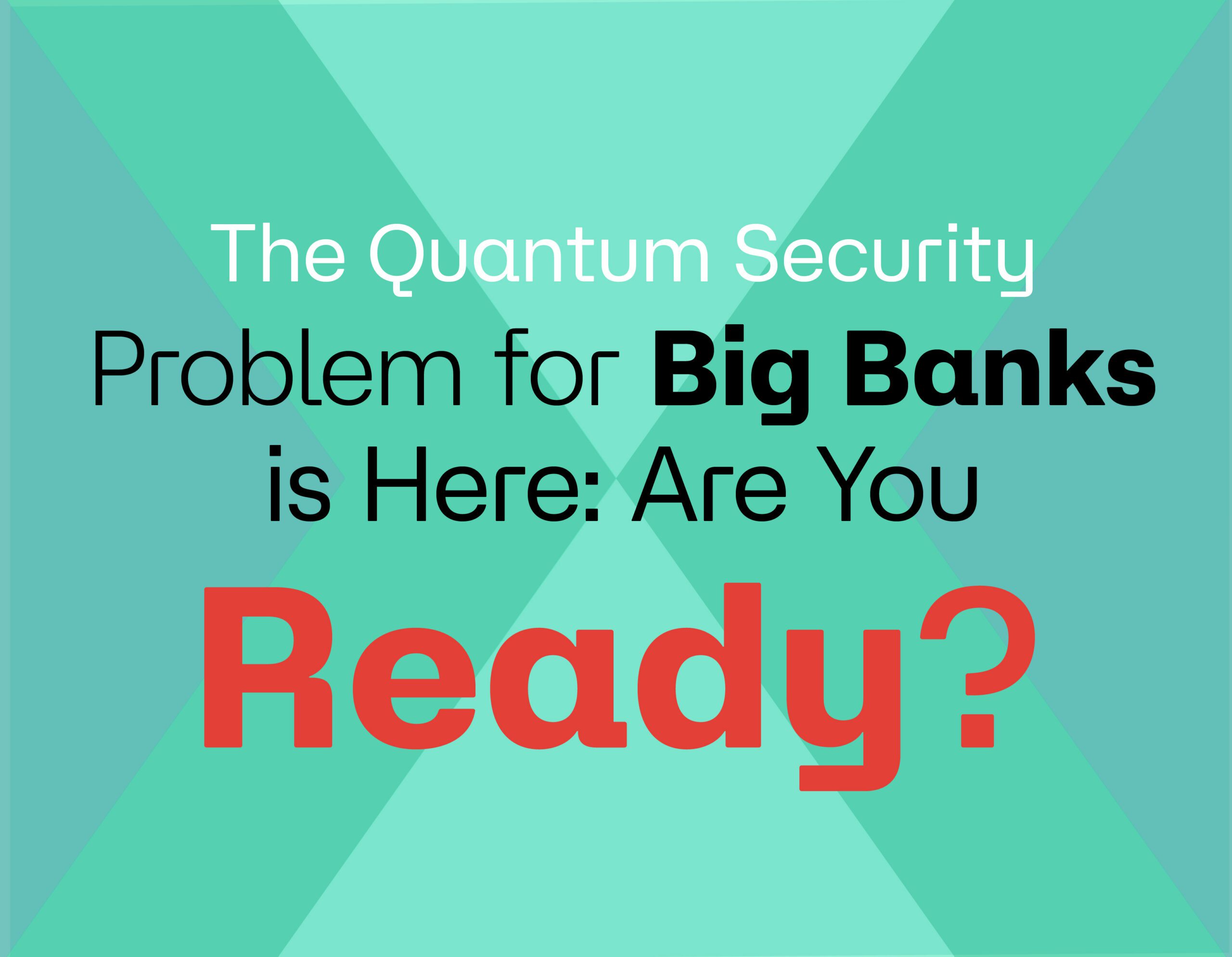
For decades, banks have secured financial transactions, customer data, and interbank communications with the same foundational encryption architecture. It worked because the algorithms behind it were considered unbreakable.
That assumption is no longer safe.
Advances in quantum computing, combined with AI-accelerated cyberattacks, have created a new threat that is active right now. Nation-state adversaries are already collecting encrypted financial data today. Their plan is straightforward: store it, wait for quantum computers to mature, then decrypt it.
This is Harvest Now, Decrypt Later (HNDL). It is not a future risk. It is happening now.
Financial data holds its value for decades. Transaction histories, personal records, and account data stolen today remain just as valuable when decrypted in three, five or ten years from now. Banks are a primary target, and their data is already being collected.
Global banking regulators are not waiting for Q-Day to raise expectations.
The National Institute of Standards & Technology (NIST) released the first generation of post-quantum cryptography (PQC) standards in 2024. Financial regulators in the U.S., UK, and EU are already signaling that institutions should inventory cryptographic assets and develop migration plans. Critical infrastructure guidance is making it clear: delayed PQC adoption carries real risk.
The problem banks now face is not whether to migrate. It is how to do it without breaking the systems that run the business.
Encryption is not isolated in banking infrastructure. It runs through:
Replacing cryptographic algorithms across all of those systems is a multi-year project at best. And the work does not stop with the first migration. Post-Quantum Cryptography (PQC) algorithms will continue to evolve. Every algorithm eventually breaks. Banks that migrate once will need to migrate again and again.
This is the harder truth: swapping one algorithm for another is not a strategy. It is a short-term fix that will need to be repeated.
The question most banking executives are not asking is: what happens when a PQC algorithm breaks?
Because it will. History has proven this with every generation of cryptographic standards. In the quantum era, the pace of change will accelerate, not slow down.
What banks need is not a new algorithm. They need an architecture that lets them adapt quickly, without downtime, without application rewrites, and without emergency migrations every time standards change.
That is Crypto-Agility. The ability to change algorithms centrally and quickly, without disrupting the infrastructure or the business.
The most effective place to begin is the network layer, where financial data actually moves.
Securing encryption and key management at the network layer protects:
This approach does not require ripping out existing infrastructure. It works as an overlay, strengthening what is already in place and supporting both current encryption standards and emerging PQC algorithms.
Phio TX®, Quantum XChange’s cryptographic management platform, is built on this architecture. It hardens existing infrastructure, provides centralized cryptographic control, and allows organizations to deploy quantum-safe protections with no downtime, no application rewrites, and no rip-and-replace.
Two risks grow every day a bank delays.
Banks that start now have time to move thoughtfully. Banks that wait will face rushed migrations, higher costs, and greater exposure.
Quantum readiness does not require a massive infrastructure overhaul on day one. Start here:
The goal is not simply to replace one encryption method with another. The goal is to build an infrastructure that stays secure as threats and standards change.
In the quantum era, encryption is no longer something banks can set and forget. The organizations that accept that now will be far better positioned than those that find out the hard way.
Have one of our experts show you how Phio TX protects your organization from threats today and the quantum future.
Request Request
a a
demo demo