Media Coverage
The Quantum Attack Surface Federal Roadmaps Miss

Back to Media Coverage
13 Jul 2026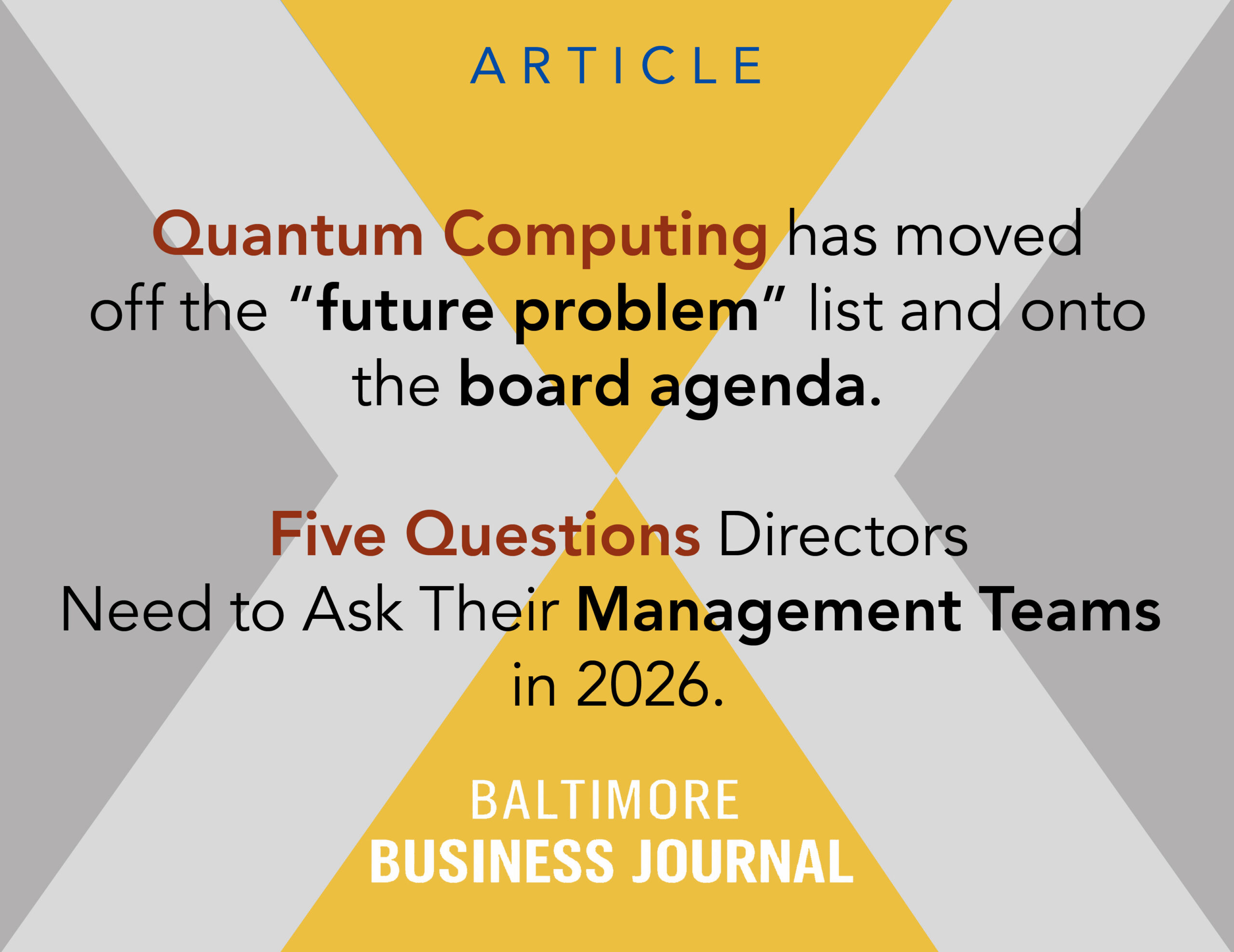
Quantum XChange CEO Eddy Zervigon makes the case in the Baltimore Business Journal that quantum computing has moved off the “future problem” list and onto the board agenda. The cryptographically-relevant quantum computer (CRQC) may be a few years out, but the risk is already here. Adversaries don’t need a working quantum machine to breach you tomorrow. They can harvest encrypted data now and decrypt it later, once the capability arrives.
That Harvest Now, Decrypt Later (HNDL) threat is why Zervigon argues quantum readiness belongs in enterprise risk management, not just in the IT backlog. Any organization holding data that must stay confidential into the 2030s already has an open exposure window. The breach can be retroactive, but the accountability will be current.
The article gives directors five questions to put to their management teams in 2026:
Zervigon’s parting advice, director to director: companies that delay will face compressed timelines, scarce talent, premium vendor pricing, and rushed implementation. Boards should ask for and oversee a strategic quantum risk plan with a cryptographic inventory, a prioritized risk assessment, a phased budget, a vendor-readiness strategy, a target timeline, and named executive ownership across security, IT, legal, procurement, and operations.
“The hardest part of quantum readiness was never the math. It was the governance.” — Eddy Zervigon, CEO, Quantum XChange
Have one of our experts show you how Phio TX protects your organization from threats today and the quantum future.
Request Request
a a
demo demo